

The useful question between the Dainese Tempest 3 and Tempest 4 D-Dry is what you save and what the extra money buys. The checked Tempest 3 offer is €209.97, against €299 for the 4 at Dainese: a €89.03 difference. Our recommendation: consider the 3 if it fits well and you want to spend less; consider the 4 if you need its declared Smart Air compatibility or prefer its revised fit.
This comparison uses manufacturer documentation and published prices checked on 7 October 2026. We have not road-tested both jackets or measured their insulation. We compare the men's jackets; trousers and women's versions are outside this table. Prices below are Spanish-market euro references, not quotes for every country.
Tempest 3 vs 4: buying overview
| Feature | Tempest 3 D-Dry | Tempest 4 D-Dry |
|---|---|---|
| Checked price | €209.97 offer; retailer RRP €299.95 | €299 at the official store |
| Layers | Fixed D-Dry and removable insulation | Fixed D-Dry and removable insulation |
| Certification and armour | Class A; level 2 shoulders and elbows | Class A; level 2 shoulders and elbows |
| Highlighted construction | D-Stone reinforcement | Bi-elastic fabric and stretch inserts |
| Smart Air | We do not treat compatibility as confirmed | Dainese declares it suitable to wear over Smart Air |
| Why buy it? | Meaningful saving and your size available | Smart Air compatibility and fit justify the premium |
Sources: Tempest 3 specifications, Tempest 4 specifications and price and Motocard's Tempest 3 offer. These are specific variants; prices and availability depend on size, colour and promotions.
What changes with the Tempest 4?
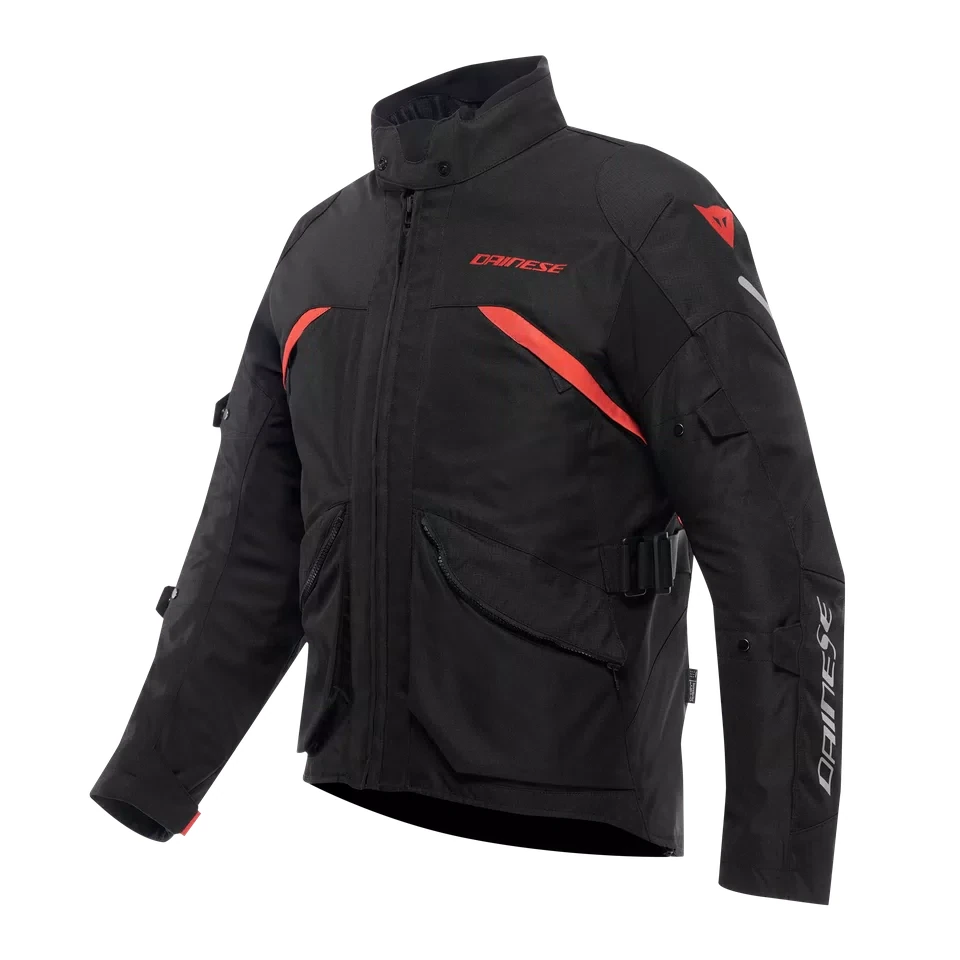
The documented buying differences include bi-elastic fabric, stretch inserts and declared Smart Air compatibility. The specification also identifies two waterproof outer pockets. These give you concrete points to assess; a newer generation does not establish that it will feel more comfortable on your body.
If you use that airbag, the manufacturer's declaration is a reason to consider the 4. Check the system's instructions, sizing and expansion space. The jacket does not include the airbag. We do not conclude that the Tempest 3 is incompatible: we lack a specific confirmation that would allow us to recommend that combination here.
The 3's D-Stone reinforcement and the 4's bi-elastic fabric describe their specifications. They are not comparative abrasion or weight measurements. Without equivalent tests, we do not claim that one shell withstands abrasion better.
What stays: rain protection, insulation and class A
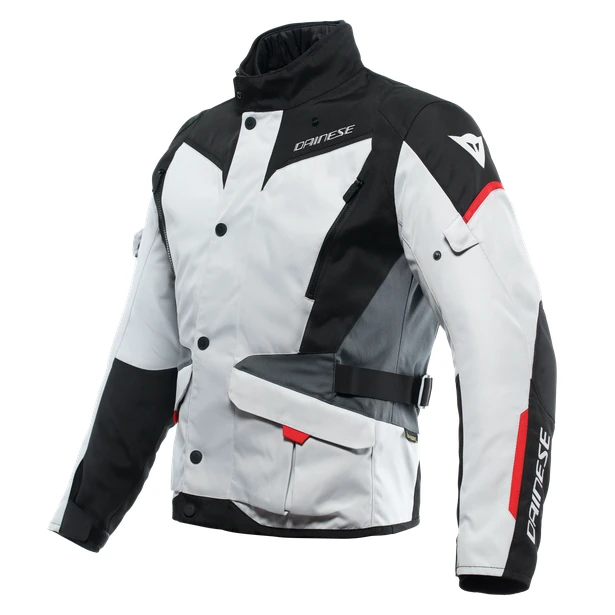
Both keep their waterproof membrane installed while allowing you to remove the insulation. That is straightforward for variable-weather commuting because there is no separate inner rain layer to fit. It does not establish that the outer fabric never gets wet or that both jackets feel equally warm.
Dainese Japan explains that the Tempest 3's ventilation works outside the membrane. The 4 also has ventilation, but we lack comparable measurements to claim better summer performance. For substantial heat, see our summer jacket selection.
The 4 retains class A; the generation change does not bring an AA rating. Level 2 refers to the impact protectors rather than the complete garment. If you want an AA jacket, compare alternatives such as the Rev'it Sand 5 H2O.
Is the extra €89 worthwhile?
We would choose a discounted Tempest 3 when budget matters, the available size fits with your usual layers and you do not depend on confirmed Smart Air compatibility. Keeping €89 has value in that situation. Check returns, stock and optional protector costs before buying.
We would choose the Tempest 4 if you plan to use Smart Air following the manufacturer's instructions, prefer its fit after trying it on or cannot find your size in the 3. If both cost approximately €299, the older jacket's saving disappears: we would assess the 4 first, while still considering a 3 that fits better.
If you already own a serviceable Tempest 3, we see no reason to replace it solely for the generation number. A change should meet a specific fit, equipment or riding need your current jacket does not cover. We do not set a universal minimum discount; €89 is the difference between the checked prices.
Frequently asked questions
Does the Tempest 4 replace the 3?
It is the next generation in the family. The 3 still appears at retailers as a discounted option. Detection by the news agent on 7 October does not establish a launch that day: Dainese Japan documented the 4's arrival on 4 October.
Is the 4 warmer or more waterproof?
We have no comparable tests to establish that. Sharing the D-Dry name and including insulation does not prove equality or a quantified improvement. Membrane figures and marketing descriptions are not our road-test results.
Which would we buy for autumn and winter?
The 3 if the saving and fit work for you; the 4 if its features match your equipment and riding. Our winter jacket comparison puts them in context alongside other constructions. The Tempest 3 review covers the older model in more detail.


