
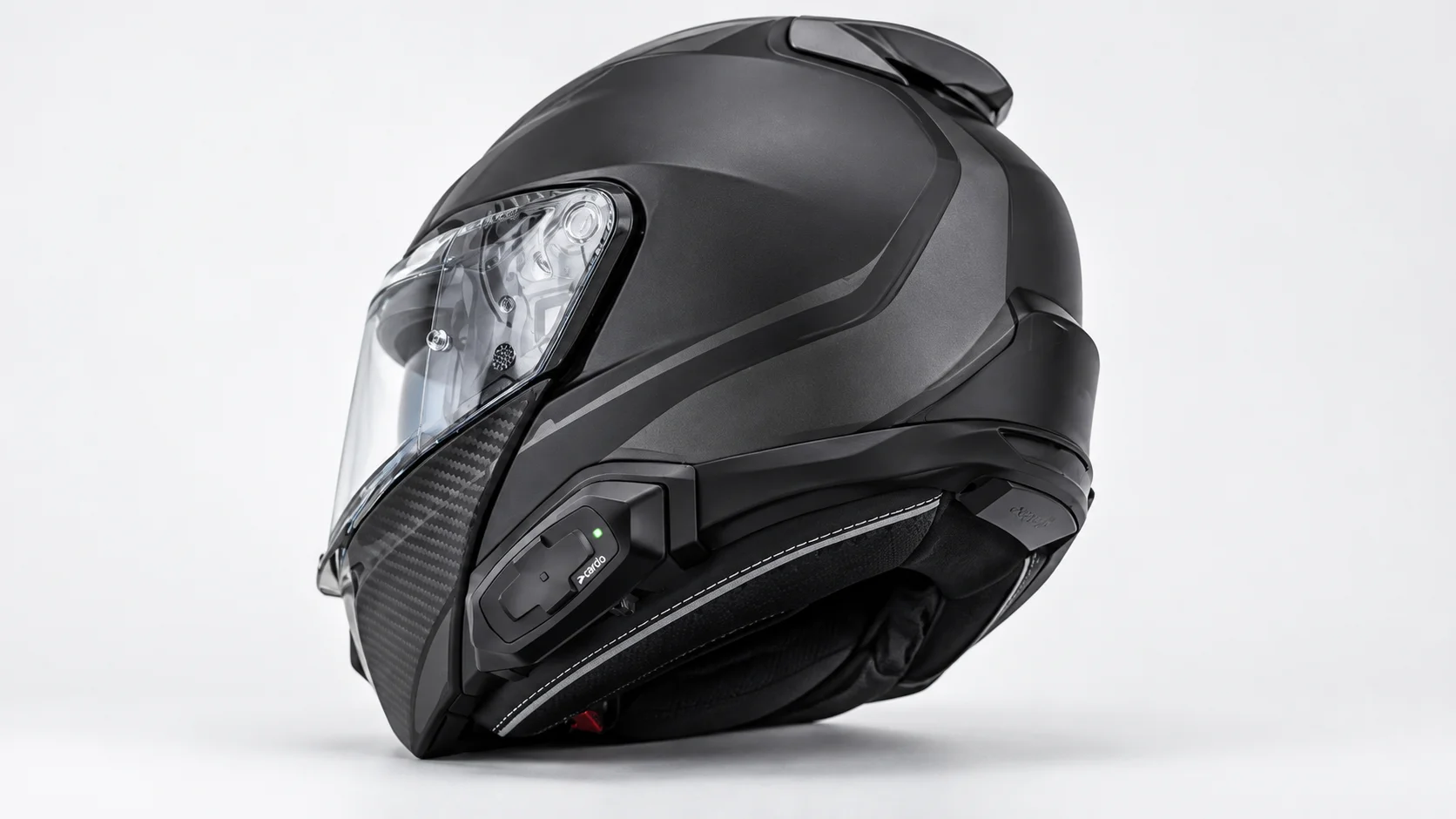
Cardo and HJC have launched the first intercom systems built directly into the helmet shell, with no external module to clip on. Instead of bolting a Cardo unit onto the side of any helmet, these three systems — HJC Spirit, HJC 4X and HJC Packtalk — are housed inside specific HJC models, keeping the original design, fit and aerodynamics intact. Here's how the three tiers compare and which helmets support them.
| Feature | HJC Spirit | HJC 4X | HJC Packtalk |
|---|---|---|---|
| Price | €139.95 | €279.95 | €409.95 |
| Riders in the group | 2 | 4 | Up to 31 (second-gen DMC mesh) |
| Range | 0.4 km | 1.2 km | 1.6 km |
| Talk time | About 10 h | Up to 13 h | Up to 13 h |
| Speakers | 40 mm HD | 40 mm JBL | 40 mm JBL |
| Extras | Built-in FM radio | Pairs with Sena, Midland and UClear | Mesh reconnection in spread-out groups |
Why an integrated intercom instead of a module
Clip-on intercoms have always been a compromise: extra weight and wind noise on one side of the helmet, a battery pack that sticks out, and a mounting base that needs gluing on. Building the electronics, speakers and microphone straight into the shell during manufacturing solves all three — no bulk, no wind noise from the unit itself, and no risk of it coming loose at speed. The trade-off is that it only works with the specific HJC helmets designed for it; you can't retrofit it onto a helmet from another brand or an older HJC.
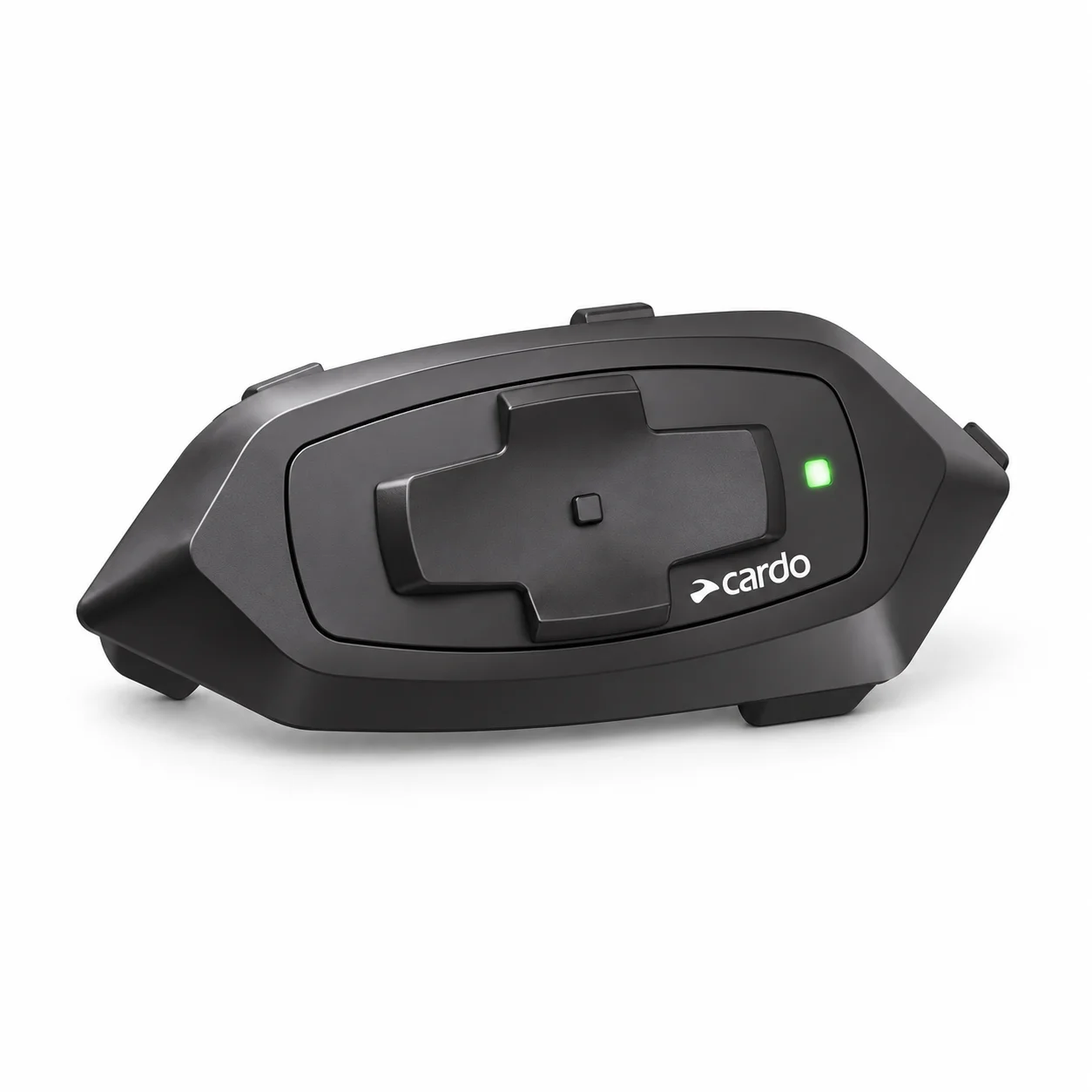
HJC Spirit — €139.95
The entry system, built for pairs rather than groups: it includes natural voice control and a built-in FM radio. It's aimed at riders who mainly want to talk to a passenger or one other bike, not run a big group ride.
HJC 4X — €279.95
The mid-tier option, for small groups: live Bluetooth intercom for up to 4 riders with natural voice control. It also pairs directly with existing Sena, Midland and UClear units over standard Bluetooth, so it can join a mixed group without everyone switching brands.
HJC Packtalk — €409.95
The premium tier, built for large group rides: second-generation Dynamic Mesh Communication (DMC) for groups of up to 31 riders, with natural voice control. The mesh reconnects riders automatically when the group spreads out.
Which HJC helmets support it
Compatibility depends on the helmet family, since the shell needs to be designed around the module from the factory:
- Sport-touring and street: RPHA 72 Carbon, RPHA 72, RPHA 71 Carbon, RPHA 71, F71 Carbon, F71 and i71.
- Touring and modular: RPHA 91 Carbon, RPHA 91 and i91.
- Open-face and urban: RPHA 31 and F31.
In other words, this isn't compatible with every HJC helmet in the catalogue — check the specific model before buying. We'll update this list as HJC confirms compatibility with more helmets, including whether any of the 2027 range models (i101, RPHA 60 Carbon) get it.
How it compares to a standalone Cardo or Sena
For sound quality and mesh performance, the integrated Packtalk uses the same core technology as the standalone Cardo Packtalk Edge, so expect similar real-world range and battery life. What you gain is a cleaner, quieter helmet with nothing to knock loose; what you lose is flexibility — it only works if you're buying (or already own) one of the compatible HJC models, and you can't move it to a different helmet later the way you can unclip a standalone unit.
Verdict: who should consider it
- HJC Spirit: riders who mainly talk to a passenger or one riding partner and want the lowest price and cleanest setup.
- HJC 4X: small groups of up to 4 who also want to connect with friends running Sena, Midland or UClear.
- HJC Packtalk: larger group rides where riders spread out and need mesh reconnection.
If you don't own a compatible HJC helmet, a standalone unit is still the only option — see our Cardo Packtalk Edge vs Sena 60S Evo comparison for the current best all-helmet choices.
Sources: Cardo Systems (HJC Spirit), Cardo Systems (HJC 4X), and reporting from soymotero.net, motor16.com, moto1pro.com and motosan.es. This article will be updated as more compatible HJC models and full technical sheets are confirmed.


